
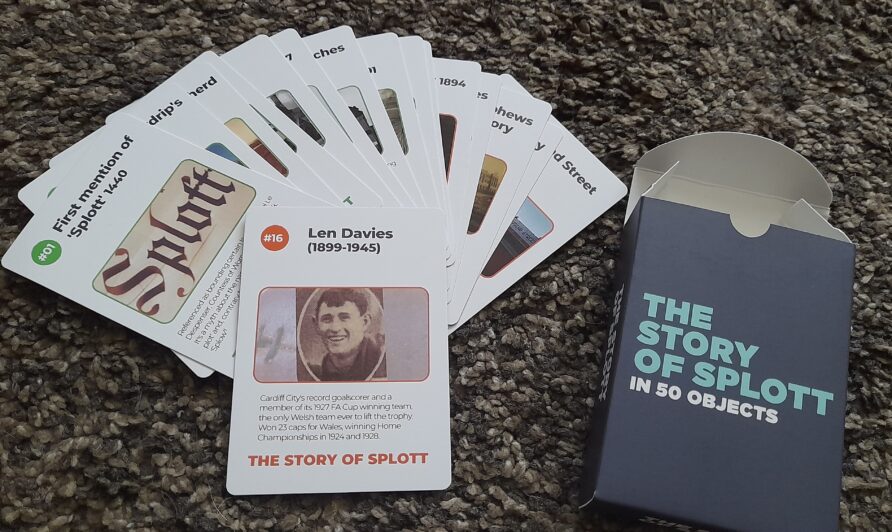
‘The Story of Splott in 50 Objects’ pocket museum. Grow Social Capital
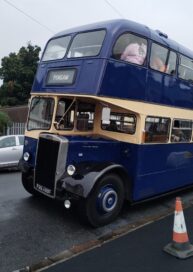
The Cardiff community of Splott recently curated its own pocket museum within which – as one might expect in a working class district – sport features prominently. Community group Splott Community Volunteers led the project convened a number of engagement and planning activities with local people…including a bus tour of Splott!
Grow Social Capital
The process was facilitated by social enterprise Grow Social Capital whose template and story based techniques helped elicit a long-list that was whittled down to a final 50. As well as sporting heritage, the Splott pocket museum includes a range of landmarks, famous sons and daughters, old traders and businesses, cultural motifs, and the name itself.
The earliest written reference to Splott dates back to the C15 th but there’s no consensus as to its origins. Does it derive from the Welsh word ‘ysblad’, a firm piece of land surrounded by marshland? Or is it an old English word ‘splot’ meaning a plot of land? One more modern suggestion is that it’s a shortened form of ‘God’s Plot’. Whichever it is, the pocket museum will help sustain the debate and conjecture. So, what of the sporting heritage objects?
Baseball, ‘poor man’s cricket’, features with some of the great Welsh internationals hailing from the Splott Albion club. Current men’s Wales football manager Craig Bellamy spent his early years in Splott on Swinton Street. Bellamy recalls in his autobiography:
“The railway tracks were at one end of our road and trains trundled past there, heading out of Cardiff Central east towards England and London. At the other end was Splott Park and behind that was the giant spread of Allied Steel and Wire where my old man worked.
There was a time in Splott when you could see the flames and the sparks dancing in the night air from the famous old Dowlais ironworks and women worried about putting their washing out on the line because it would get covered in a film of fine red dust. There was a great sense of community. Originally, people had been transported there from the Valleys to work in the factories and it was still a traditional working class area where it felt like every door was open. If my mum ever shut herself out by mistake, she’d knock next door and the neighbour would send her kid round through our back garden, through our back door and he’d open up for us at the front.”
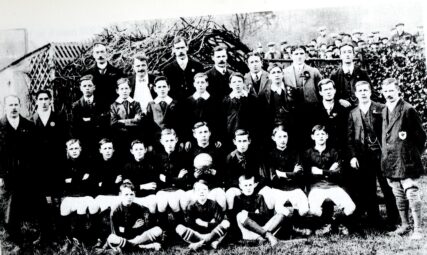
Len Davies in Wales Schoolboys Team (2nd row, 4th from Left). Ceri Stennett
Cardiff City’s record goalscorer, was a Splott boy and also won 23 Wales caps, scoring 6 goals. Legend has it his brother was an even better footballer but his family could only afford one pair of boots and it was Len whom they fitted. You can read more about Splott’s footballing heritage on the local news site Inksplott.
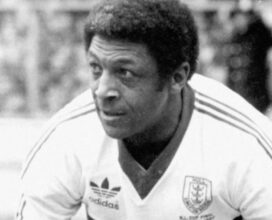 The oval ball is also represented in the pocket museum. ‘The Ilts’, the famous Old Illtydians RFC celebrate their centenary in 2029 and in the 13-aside code there is one of the all-time greats: Clive Sullivan. Born in Splott to Caribbean parents Sullivan played with distinction for both Hull rugby league clubs, Hull FC and Hull KR, as well as representing Great Britain and Wales. Indeed, Sullivan was the first person of colour to captain any British or Home Nations sporting team when he led the GB rugby league team out against France in 1972.
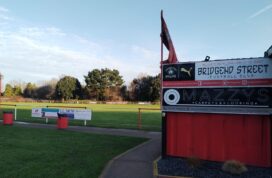
Grow Social Capital
Grassroots football club Bridgend Street AFC, formed in 1899, also figure and though they won’t be winning the Champions League anytime soon, their inclusion helps point to the contentious planning phenomenon of the mid C20th: slum clearances.
In the 1970s, the terraces of Lower Splott were razed to make way for industrial units and warehouses, with the residents living there dispersed to other parts of Cardiff, mainly the new suburban districts. But it also led to the fragmentation of a rich social and cultural fabric that included boys and girls clubs, church missions, pubs and clubs – including the evocatively named Bomb and Dagger where Shirley Bassey cut her performing teeth such as – Sunday schools and more.
Several of the streets were named after other towns in Wales: Llanelli Street, Milford [Haven] Street, Tenby Street, Swansea Street, …and Bridgend Street. There was a fierce campaign of protest and resistance against the demolition, and though a couple of streets were eventually spared (Neath Street, Aberystwyth Street), the football club’s name, and nickname , ‘The Mission’, is pretty much the only remnant of Lower Splott left today.
To learn more about the Story of Splott in 50 Objects contact Splott Community Volunteers via [email protected]. To discuss how your community – of place, interest or shared identity; or the intersection of these – might curate its own pocket museum contact Grow Social Capital on [email protected].


