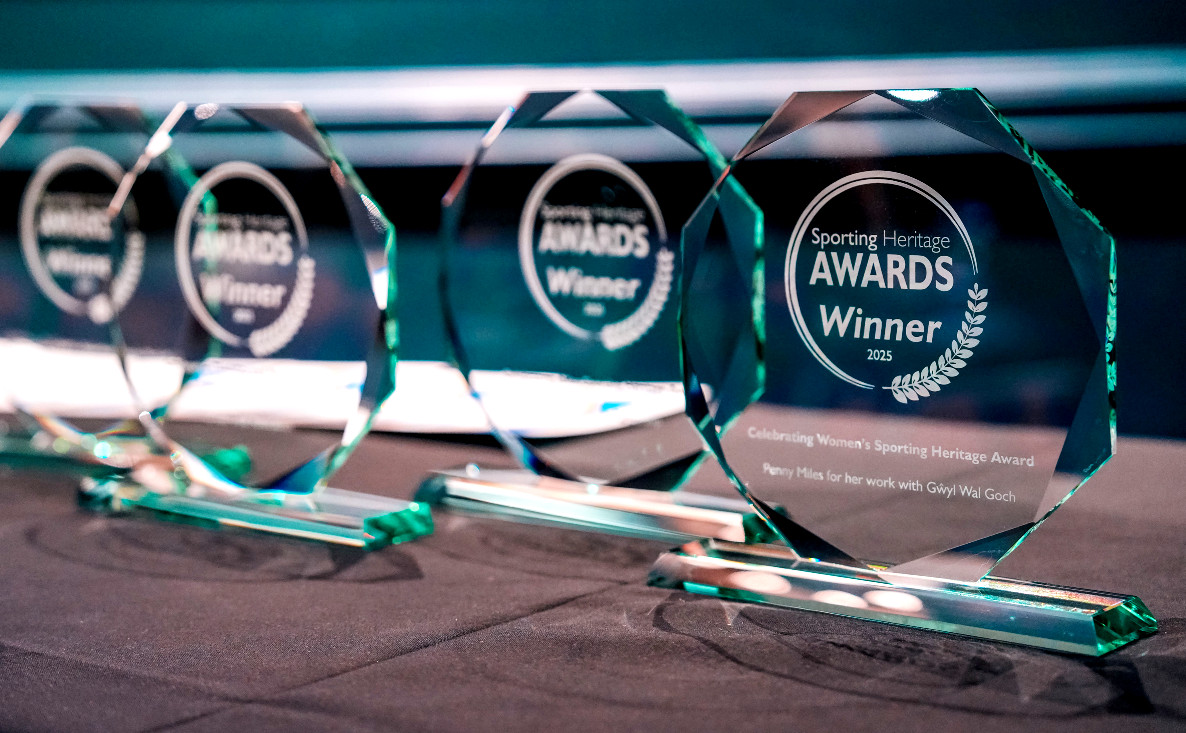
Winner: Museum of Bath at Work
Think Bath and sporting heritage and rugby comes to mind or possibly cricket, but probably not Real and Lawn Tennis. Ann Sumner and June Hannam have worked to reveal the hidden history of tennis in the city of Bath resulting in an informative exhibition which has highlighted the importance of the museum’s building which was originally a Real Tennis Court in the Georgian period, the popularity of that game and Fives in the Bath area as well as the rise in popularity of Lawn Tennis.
Bath is unique as a city with two early Lawn Tennis foundation clubs (1880 and 1882) which still flourish today, and their work has involved exploring the many other clubs in the city such as Sydney which was also an early foundation but did not survive, Oldfield and Newbridge. Their research focused on the role women played locally as clubs sprung up across the city, and they considered how churches, political parties and employers all had tennis clubs and used the courts at the Rec (Recreation Ground now best known for Rugby) and the rise of popular public courts at Sydney Gardens, Victoria Park and Alice Park. Most significantly they drew attention to the West of England Lawn Tennis Tournament played every year from 1881 -1895 at the Lansdown Cricket Club. This was part of the famous Bath Tennis Week attracting large crowds and festivities. James Dwight the father of American Lawn Tennis won the trophy in 1886 and the Ladies was won by Maud Watson once and three times by Lottie Dod in the 1880s.
They secured the loan of the famous Bath Cup, the original trophy which has not been seen in public since 1980 and traced the history of this cup which became used for the Bath Open from the 1920s and was won post war 7 times consecutively by Doug Scharenguivel. The research also focused on the manufacture locally of tennis balls, particularly in nearby Bradford on Avon, where Spencer Moulton produced balls until the 1950s as well as Rex Rubber, as well as production in the city itself.
Through community curation with the local tennis clubs they also researched the local manufacture of tennis rackets by Murray and Baldwin of Bath, from 1935 -1954 -high end rackets which were used by Hazel Wightman of Wightman Cup fame. They also learnt of Harry Lee, the famous Davis Cup player’s residence in nearby Frome and traced Andrew Castle’s early career wins in Bath as a teenager, winning the Boys Open in 1978 and 79 at the Lansdown. He contributed testimony about his memories of those days. Working closely with all tennis communities in Bath, Ann and June have worked to tell people about their hidden histories, looking into how Clubs were reported on by the Bath Chronicle, the problems with weather and surfaces for tournaments and enjoyed enthusiastic support from all involved to reveal these fascinating histories.
“We feel that this is unique research shedding new light on how the Georgians exercised with Real Tennis and exploring a sporting heritage overlooked by the city with the popularity of Lawn Tennis highlighting how broadly the game was played by all sectors of society particularly between the two World Wars. We hope to have encouraged communities and visitors to know more about this heritage which will hopefully result into more interest in the sport and participation today.”
Find out more: https://museumofbath.org/